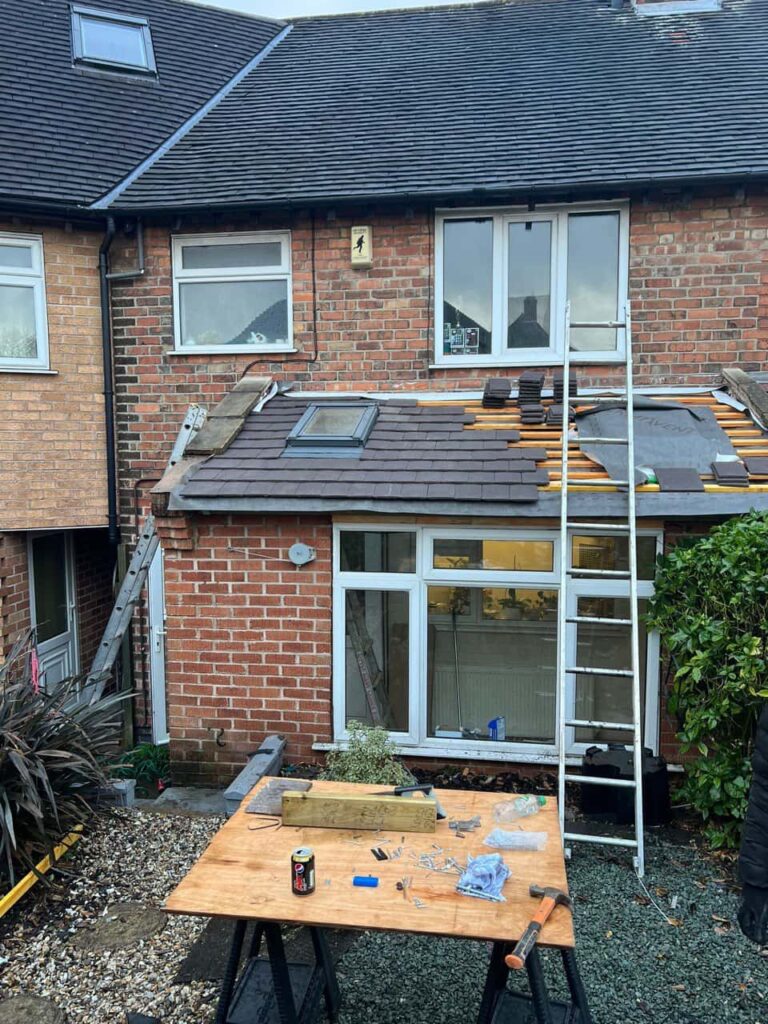
A small number of cracked roof tiles may not initially appear particularly concerning. From ground level, the roof can still look largely intact, and there may be no obvious signs of water entering the property. However, even localised tile damage can weaken the roof’s ability to direct rainwater away effectively.
Roof tiles form part of a complete weather-resistant system. When individual tiles crack, break or move out of position, the materials beneath them can become more exposed to rainfall and changing weather conditions. What begins as a relatively contained defect can therefore contribute to wider deterioration if the underlying cause and surrounding roof are not checked.
For homeowners in Verwood, Dorset, the important point is not to assume that every cracked tile represents major roof failure, but equally not to dismiss visible damage simply because only a few tiles appear affected. Early assessment can determine whether straightforward localised repairs are sufficient or whether the cracked tiles are evidence of a wider roofing issue.
Why Cracked Roof Tiles Should Not Be Ignored
Roof tiles are positioned to overlap and work together, allowing rainwater to travel down the roof towards the drainage system. Damage to individual tiles can interrupt this arrangement and create vulnerable areas.
A few cracked tiles can become more concerning when:
- Cracks allow water beneath the normal tile covering
- Broken sections leave larger openings
- Several neighbouring tiles are affected
- Tiles have also become loose or displaced
- The materials beneath the tiles are repeatedly exposed
- Water begins entering the roof space
- Nearby battens or other components become affected
- The same area repeatedly develops tile damage
- Cracking is part of more widespread roof deterioration
The extent of the problem depends on where the tiles are located, how badly they are damaged and the condition of the surrounding roof.
Why Do Roof Tiles Crack?
Roof tiles can develop cracks for several reasons.
Long-term exposure to the weather can gradually affect roofing materials, particularly as the roof ages. Strong winds and other demanding conditions may also expose existing weaknesses.
Movement within individual tiles or surrounding components can contribute to cracking, while previous damage may worsen gradually over time.
Sometimes the problem is genuinely limited to one or two tiles. In other situations, finding several cracked tiles can indicate that a larger section of the roof deserves closer inspection.
Identifying why the tiles cracked is therefore just as important as identifying the cracks themselves.
A Small Crack Can Affect How Water Travels
Roof tiles do not need to be completely missing before they become a potential source of concern.
A crack can create an alternative route for water.
During rainfall, water normally travels over the outer surface of overlapping tiles. If a crack penetrates through a tile, some moisture may begin passing through rather than continuing along the intended route.
How much water enters depends on the position and extent of the damage, as well as the weather conditions.
A minor surface mark and a tile that has split substantially are clearly different situations, which is why the condition needs to be assessed rather than judged solely from a distant view.
The Materials Beneath the Tiles Can Become More Exposed
Tiles provide the primary outer covering of a tiled roof.
There may be additional materials beneath them, but these should not be treated as a reason to leave damaged tiles indefinitely.
Once a tile is significantly cracked or broken, underlying components can experience greater exposure than intended.
Repeated exposure to moisture can gradually affect the wider roof construction, particularly if the defect remains unnoticed for a prolonged period.
Repairing damaged tiles helps restore the intended outer covering rather than relying on concealed materials to compensate for defects above them.
Water Ingress May Develop Gradually
Not every cracked tile causes an immediate visible leak.
This can make tile damage easy to underestimate.
A small amount of moisture may enter the roof construction without immediately producing a ceiling stain. Water can also travel along internal surfaces before becoming visible elsewhere.
As a result, homeowners may discover an internal damp mark some distance from the damaged tile.
The absence of visible water indoors should therefore not be taken as proof that significant external tile damage can safely be ignored.
Wind-Driven Rain Can Expose Weaknesses
Some roof defects become noticeable only during particular weather conditions.
Rain accompanied by strong wind can be driven against roofing materials from different directions. Small openings that cause little difficulty during lighter rainfall may become more vulnerable under these conditions.
This can explain why a property develops an occasional roof leak rather than leaking every time it rains.
Intermittent water ingress still warrants investigation.
If cracked tiles or surrounding defects are allowing water beneath the covering during certain weather conditions, the underlying weakness remains even after the roof appears to have dried.
Several Cracked Tiles May Indicate a Wider Issue
Finding one damaged tile does not necessarily mean that the complete roof is deteriorating.
Finding multiple damaged tiles deserves more careful consideration.
The tiles may have been affected by the same localised event, or deterioration may be becoming more widespread across the roof covering.
A professional inspection can assess nearby tiles rather than replacing only the most visibly damaged examples.
This is important because a tile immediately next to a cracked one may already be weakened even if it has not yet broken completely.
Surrounding Tiles Should Be Checked
Roof repairs should not focus so narrowly on one obvious defect that surrounding conditions are overlooked.
When cracked tiles are discovered, neighbouring tiles should also be assessed for movement, cracking and general deterioration.
The fixings and supporting elements within the affected area may also deserve attention where appropriate.
This broader assessment does not mean unnecessarily replacing large areas of sound roofing.
Instead, it helps establish the true boundaries of the defect so that repair work addresses the complete affected area.
Repeated Tile Cracking Can Provide an Important Clue
If tiles in the same area repeatedly require replacement, simply installing another tile may not provide the complete answer.
Recurring damage can indicate an underlying reason why that section continues experiencing problems.
There may be movement, deterioration within surrounding components or another localised issue contributing to repeated failure.
Looking for this root cause can prevent a cycle in which the visible symptom is repaired while the underlying problem remains.
A reliable repair should aim to understand why the damage developed as well as restore the roof covering.
Water Can Travel Before Becoming Visible Indoors
One of the reasons roof leaks can be difficult to diagnose is that water does not necessarily fall vertically from the entry point onto the ceiling below.
Once beneath the tiles, moisture can follow roof components and internal surfaces.
The damp patch eventually noticed inside the property may therefore be some distance from the original defect.
This makes diagnosis based solely on the location of an internal stain unreliable.
External inspection of the roof, together with assessment of accessible internal areas where necessary, can help trace the likely route of water ingress more accurately.
Cracked Tiles Can Develop Into Broken Tiles
A cracked tile has already lost some of its original integrity.
Continued weather exposure and movement can potentially cause the damage to progress. A crack may widen, or part of the tile may eventually break away.
At that point, a relatively narrow defect can become a more obvious opening in the roof covering.
Early attention can prevent this progression in situations where the surrounding roof remains in satisfactory condition.
This is one reason localised tile repairs can be valuable: they restore vulnerable areas before the defect has an opportunity to become more extensive.
Loose and Cracked Tiles Can Occur Together
A damaged tile may not always remain securely positioned.
Where cracking is accompanied by movement, the condition deserves particular attention because the tile may no longer be performing as intended.
A loose section can potentially shift further during demanding weather.
Inspection should therefore consider both the physical condition of the tile and whether it remains correctly positioned within the roof covering.
Replacing a cracked tile without considering why it moved may leave the underlying cause unresolved.
Internal Damp Marks Can Appear Later
Homeowners sometimes assume that a roof defect cannot be serious if there is no visible ceiling damage.
Internal staining is often a later sign rather than the first stage of the problem.
Moisture needs to travel far enough through the roof construction to become visible within the occupied part of the property.
By the time a clear water mark appears, the external defect may have been present for some time.
Visible tile damage can therefore provide an opportunity to investigate the roof before internal symptoms become more obvious.
A Few Cracked Tiles Do Not Automatically Mean You Need a New Roof
It is equally important not to exaggerate the significance of localised damage.
A small number of cracked tiles on an otherwise serviceable roof can often represent a contained repair issue rather than evidence that the entire covering needs replacing.
The wider roof condition determines what level of work is appropriate.
If surrounding tiles remain sound and the supporting construction is in suitable condition, replacing damaged tiles and addressing any localised cause may be sufficient.
More extensive work should only be considered where inspection identifies broader deterioration.
When Does Cracking Become a Wider Roofing Concern?
Cracked tiles become more concerning when they form part of a pattern.
Multiple damaged areas, recurring leaks, widespread tile deterioration or continuing movement can indicate that the problem extends beyond a few isolated defects.
The age and general condition of the roof covering can also provide useful context.
A roof containing one recently damaged tile presents a very different situation from one where cracking is developing repeatedly across numerous sections.
Professional assessment helps distinguish between these circumstances.
Repairing Only the Visible Damage May Not Be Enough
Replacing the obviously cracked tile is important, but the repair process should also consider what caused the problem.
If the damage was genuinely isolated, straightforward replacement may be all that is required.
Where surrounding deterioration, movement or another defect contributed to the cracking, that issue should be addressed as part of the repair.
This root-cause approach reduces the likelihood of returning to the same section of roof for the same problem.
Good roofing work is therefore not simply about making visible damage disappear.
Prompt Repairs Can Help Protect Surrounding Roofing Materials
Roof deterioration can become more complicated once moisture begins affecting multiple components.
Addressing cracked tiles while damage remains localised can help maintain the protection provided to the surrounding roof construction.
This does not mean every minor imperfection requires extensive intervention.
It means that genuine cracks, broken sections and displaced tiles should be assessed within a reasonable timeframe rather than left until water ingress becomes obvious.
Preventative attention is particularly valuable when a straightforward repair can preserve otherwise serviceable roofing.
Avoid Inspecting Damaged Tiles From the Roof Yourself
Cracked tiles can sometimes be seen from ground level or from an appropriate internal roof space, but determining their exact condition may require closer inspection.
Homeowners should not attempt to access the roof simply to investigate suspected damage.
Roof surfaces can be hazardous, and damaged or loose tiles may make access even less predictable.
A professional roofer can inspect the relevant areas using appropriate methods and determine whether the visible crack is isolated or part of a wider issue.
Professional Assessment Helps Avoid Guesswork
Roof problems are not always as straightforward as they first appear.
A ceiling stain might be associated with cracked tiles, but water could also be entering through another nearby defect. Similarly, several cracked tiles may be obvious while a less visible problem is contributing to their deterioration.
Professional assessment considers the damaged tiles within the context of the surrounding roof.
This makes it possible to identify what actually requires attention rather than relying on assumptions based solely on what can be seen from ground level.
Cracked Roof Tile Repairs in Verwood, Dorset
For homeowners in Verwood, Dorset, cracked roof tiles are worth investigating before they have the opportunity to contribute to wider deterioration.
At MCM Roofing Repairs Verwood, we can assess damaged tiles and the surrounding roof covering to determine whether the problem is isolated or connected with another defect.
Where straightforward tile replacement is sufficient, repairs can remain focused on the affected area. Where the inspection identifies a wider cause, the appropriate work can be considered so that the problem itself is addressed rather than repeatedly treating the same visible symptom.
Conclusion
Yes, a few cracked roof tiles can potentially lead to a much bigger problem if they allow water beneath the roof covering or form part of wider deterioration.
However, cracked tiles do not automatically mean that the complete roof is failing. In many cases, damage can remain localised and may be addressed through targeted repairs, particularly when it is identified before moisture begins affecting surrounding components.
The key is to establish why the tiles have cracked, inspect the neighbouring roof area and determine whether water has found a route beneath the covering.
If you have noticed cracked, broken or damaged roof tiles at your property in Verwood, Dorset, contact MCM Roofing Repairs Verwood. We can assess the affected area and recommend an appropriate repair based on the actual condition of the roof.
Call us on: 01202 149 796
Click here to find out more about MCM Roofing Repairs Verwood
Click here to complete our contact form and see how we can help with your roofing needs.